The last time you tried whitening strips, day three ended with you wincing at a glass of ice water and quietly throwing the rest of the box in a drawer. Now there is a group trip coming up, a lot of photos in your future, and a question you have not quite answered: is whitening just not for people like you?
It usually is. Most people with sensitive teeth can whiten comfortably by changing how they do it rather than whether. That means a lower peroxide concentration used over more sessions, shorter wear times, rest days between sessions, a desensitizing toothpaste started beforehand, and a delivery method that keeps gel off the gums. It also means finding out why your teeth are sensitive in the first place, because some causes need attention before any whitening.
Why does whitening hurt sensitive teeth?
Under the enamel is dentin, a layer threaded with thousands of microscopic tubules that run toward the nerve at the center of the tooth. Each tubule holds fluid. When something cold, sweet or airy moves that fluid, the nerve registers it as a sharp, quick twinge. That is ordinary tooth sensitivity.
Whitening adds to it in two ways. Peroxide is small enough to diffuse through enamel and dentin and reach the pulp, where it causes a temporary irritation of the nerve. And the gel dehydrates the tooth slightly, which makes the tubules more reactive for a while. For most people the result is a few days of on-and-off zingers that fade once the course ends. For people whose dentin is already more exposed, the same dose is felt more strongly.
- Gum recessionRoot surfaces have no enamel covering, so exposed roots near the gumline are often the most sensitive part of the mouth.
- Enamel wear or erosionAcidic drinks, reflux, grinding and hard brushing can thin enamel and bring dentin closer to the surface.
- Cracks, cavities or leaky fillingsThese create direct paths toward the nerve. Whitening over them tends to hurt, and they need treatment regardless.
- Recent dental workTeeth can be temporarily more sensitive after fillings, deep cleanings or orthodontic adjustments.
What is the best teeth whitening for sensitive teeth?
There is no single best product, but there are clear features that make whitening easier on sensitive teeth. The format matters mainly because it controls how much gel touches the gums and roots, and how much control you have over strength and time.
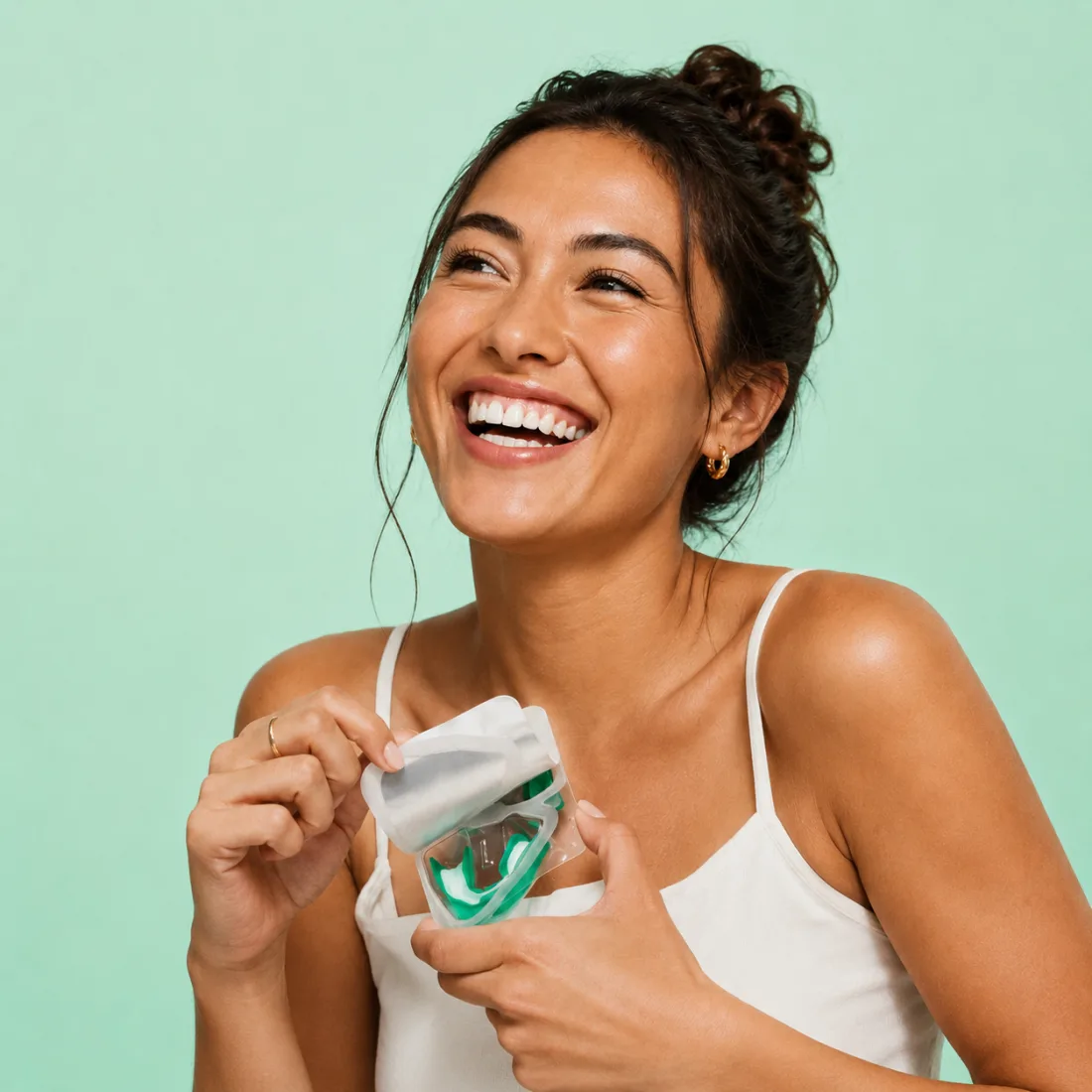
OneOral's prefilled whitening trays use a 15% hydrogen peroxide gel that includes potassium nitrate and fluoride. That is a moderate at-home strength rather than a gentle one, so for very sensitive teeth the pacing matters: shorter sessions, rest days, and a quick message to a licensed dentist through the membership before you start if you are unsure.
How to whiten sensitive teeth without the pain
Get the cause checked
If a tooth hurts on its own, lingers after cold, or has not been looked at in a while, get an exam first. Cavities, cracks and exposed roots are better treated before whitening.
Prep for two weeks
Brush with a potassium nitrate toothpaste for a week or two before starting. Potassium nitrate calms the nerve's response and tends to work better with a head start.
Start low and short
Choose the lowest strength available and cut the first sessions shorter than the maximum wear time. You can build up if your teeth tolerate it.
Space the sessions
Every other day, or two sessions then a rest day, gives the nerve time to settle. It often reaches a similar result, just a little later.
Protect the gums and roots
Keep gel off the gumline. Wipe away any excess as soon as the tray or strip is in place.
Aftercare every time
Rinse off leftover gel, brush gently with a fluoride or sensitivity toothpaste, and skip ice-cold and acidic drinks for a few hours.
Sensitivity is not a reason to brush less. Use a soft brush, light pressure and a small circular motion at the gumline. Hard scrubbing wears enamel and pushes gums back, which is one of the ways teeth get sensitive to begin with.
What helps sensitive teeth after whitening?
If you are mid-course and your teeth are complaining, pause for a day or two. Keep using a sensitivity toothpaste; some people also leave a small amount on the sensitive teeth after brushing at night rather than rinsing it all away. A fluoride gel or rinse can help too. Avoid very hot, very cold and acidic food and drinks while things settle. Most whitening sensitivity fades within a day or two of stopping, and you can usually restart at a gentler pace.
Stop whitening and see a dentist if one tooth hurts much more than the others, if pain lingers for more than a few seconds after the trigger, if a tooth aches without any trigger, or if sensitivity lasts more than a few days after stopping. Swelling, fever or severe pain needs prompt in-person care, and swelling spreading toward the eye or neck, or trouble swallowing or breathing, needs urgent care.
Can you whiten your teeth if you have sensitive teeth?
How long does sensitivity last after whitening?
Is carbamide peroxide better for sensitive teeth?
Do sensitivity toothpastes stop whitening from working?
How do I get rid of coffee stains without whitening?
Ready to Transform Your Oral Health?
Join thousands of members who are preventing cavities with OneOral.