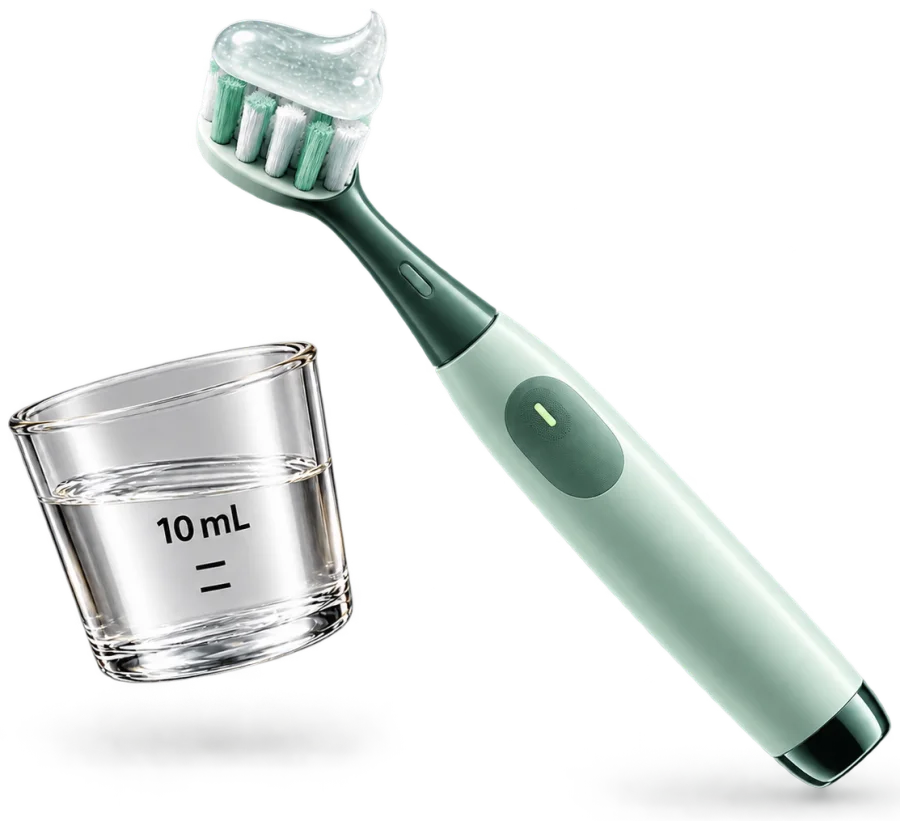
It is 9:40 on a weeknight. The strips are on the bathroom counter, the wedding photos are in three weeks, and you are standing there with a loaded toothbrush wondering whether you are about to help the peroxide or sabotage it. The box says almost nothing useful about the order.
Short answer: yes, clean your teeth before you put strips on, but do it gently and give your gums a little time before the peroxide goes on. Afterward, rinse, and if you want to brush, use a soft brush and a plain fluoride toothpaste rather than scrubbing. The reasons behind each of those steps are more interesting than the rules, and they change a few details depending on how sensitive your teeth are.
Should you brush your teeth before whitening strips?
Whitening gel works by contact. The peroxide in a strip has to sit against the enamel surface and diffuse into the tooth, where it breaks down the pigmented molecules responsible for most yellowing. Anything sitting between the gel and the enamel gets in the way. That includes plaque, the soft film of bacteria that builds up over the day, and bits of food along the gumline.
Plaque is not evenly spread. It collects near the gums and in the grooves between teeth, which is exactly where people tend to notice uneven whitening later. A clean surface gives the gel a fair chance at the whole tooth rather than the parts that happened to be clean. So brushing (or at least a thorough clean) before strips makes sense for most people.
There is one more layer you cannot brush off, and you would not want to. Within minutes of cleaning, a thin protein coating called the pellicle forms on enamel from saliva. It is part of how teeth protect themselves, and peroxide passes through it without much trouble. You are clearing plaque and food, not trying to get teeth squeaky bare.
Strips mostly whiten the flat front surfaces, but debris between teeth can hold gel away from the edges and irritate the gums. A quick floss before the brush takes under a minute and tends to give a more even look at the sides of each tooth.
How long should you wait after brushing before applying strips?
This is where the gentle part matters. Brushing, especially hard brushing, can leave the gum margin slightly tender and can briefly expose more of the tooth near the gumline. Peroxide that lands on freshly scrubbed gum tissue is more likely to sting or leave a temporary white patch. Many dentists suggest brushing with a soft brush and light pressure, then waiting around 30 minutes before applying strips if your gums or teeth tend to be sensitive.
If your mouth is not sensitive, you can usually apply strips shortly after brushing. Rinse well with plain water first so no toothpaste residue is left behind. Toothpaste leaves a film of detergent, flavor oils and sometimes silica on the tooth, and that film can reduce how well the strip grips. Then dry the teeth lightly with a tissue or just by keeping your lips off them for a few seconds. Strips stick better to a surface that is not dripping with saliva.
Floss
Clear food and plaque from between teeth so the gel reaches the edges and the gums are not holding debris against the strip.
Brush gently
Soft brush, light pressure, a regular fluoride toothpaste. Skip whitening or charcoal pastes right before strips; they are more abrasive and add nothing here.
Rinse with plain water
Remove toothpaste residue so the strip adheres and the gel contacts enamel directly.
Wait if you are sensitive
Around 30 minutes lets irritated gum tissue settle before peroxide touches it. Not strictly needed for everyone.
Dry and apply
Lightly dry the teeth, place the strip along the gumline without pressing it onto the gums, and follow the wear time on the box.
Should you brush your teeth after whitening strips?
After you peel the strips off, there is usually a little gel left on the teeth and some on the gums. The first job is to get it off. Rinse with water, or wipe the teeth gently with a damp cloth or soft brush. Leftover peroxide sitting on the gums is a common reason for the tender, whitened patches people notice the next morning.
Brushing after strips is fine, and plenty of people prefer it because the gel can feel slick. Keep it gentle. Right after whitening, the enamel surface is temporarily more porous and a little dehydrated, which is partly why teeth can look extra bright for the first day. Saliva rehydrates and remineralizes that surface over the following hours. A soft brush with a regular fluoride toothpaste supports that process. Aggressive scrubbing or a gritty whitening paste does not help it.
If you are unsure, rinse right away, then brush normally before bed. That removes the gel promptly and still leaves the fluoride toothpaste on your teeth overnight, when saliva flow drops and teeth benefit most from it.
What about eating and drinking afterward?
Most strip instructions suggest holding off on food and drink for a short while after a session, and it is sensible to be a little choosy for the rest of the day. Dark, staining drinks like coffee, black tea, red wine and cola are the obvious ones. Very acidic foods and drinks are the less obvious ones, because acid softens the enamel surface at a time when it is already slightly more porous. Water is always fine.
Brush before or after whitening strips: which matters more?
Both, for different reasons. Brushing before affects how well the strip works. Rinsing or brushing after affects how comfortable your teeth and gums feel. If you only have time for one, clean before. A strip on a plaque-covered tooth is mostly whitening the plaque.
What if whitening strips make your teeth sensitive?
Some sensitivity during a whitening course is common and usually temporary. Peroxide travels through enamel into the dentin underneath, where tiny fluid-filled channels connect to the nerve inside the tooth. The nerve can get briefly irritated, which shows up as short, sharp twinges with cold air or cold drinks. For most people it settles within a day or two of stopping.
Your brushing routine can help. A toothpaste with potassium nitrate, the ingredient in most sensitivity pastes, calms the nerve response, and it tends to work best when you start it a week or two before whitening and keep going during the course. Fluoride toothpaste helps the enamel surface recover between sessions. Spacing sessions out, for example every other day, also gives the tooth time to settle. If sensitivity is your main concern, our guide to whitening for sensitive teeth goes deeper on product choices and concentrations.
Stop whitening and contact a dentist if one tooth hurts much more than the others, if pain lingers for minutes after a cold drink, or if sensitivity continues for more than a few days after you stop. Those can point to a cavity, a crack or an exposed root that whitening is irritating. Swelling in the gum or face, fever, or severe pain needs prompt in-person care.
It is also worth knowing what strips cannot do. They whiten natural enamel, not fillings, crowns or veneers, so a tooth-colored filling on a front tooth may stand out more afterward. And if your teeth have not been checked in a while, a quick look before whitening can catch a small cavity or a worn spot that would otherwise turn a cosmetic project into a painful week. OneOral members can message a licensed dentist about this kind of question before they start, which is often all it takes to pick the right approach.
Do you brush your teeth before or after whitening strips?
Can I use whitening toothpaste before strips?
Should I brush right after taking strips off?
Does brushing before strips make them work better?
Ready to Transform Your Oral Health?
Join thousands of members who are preventing cavities with OneOral.