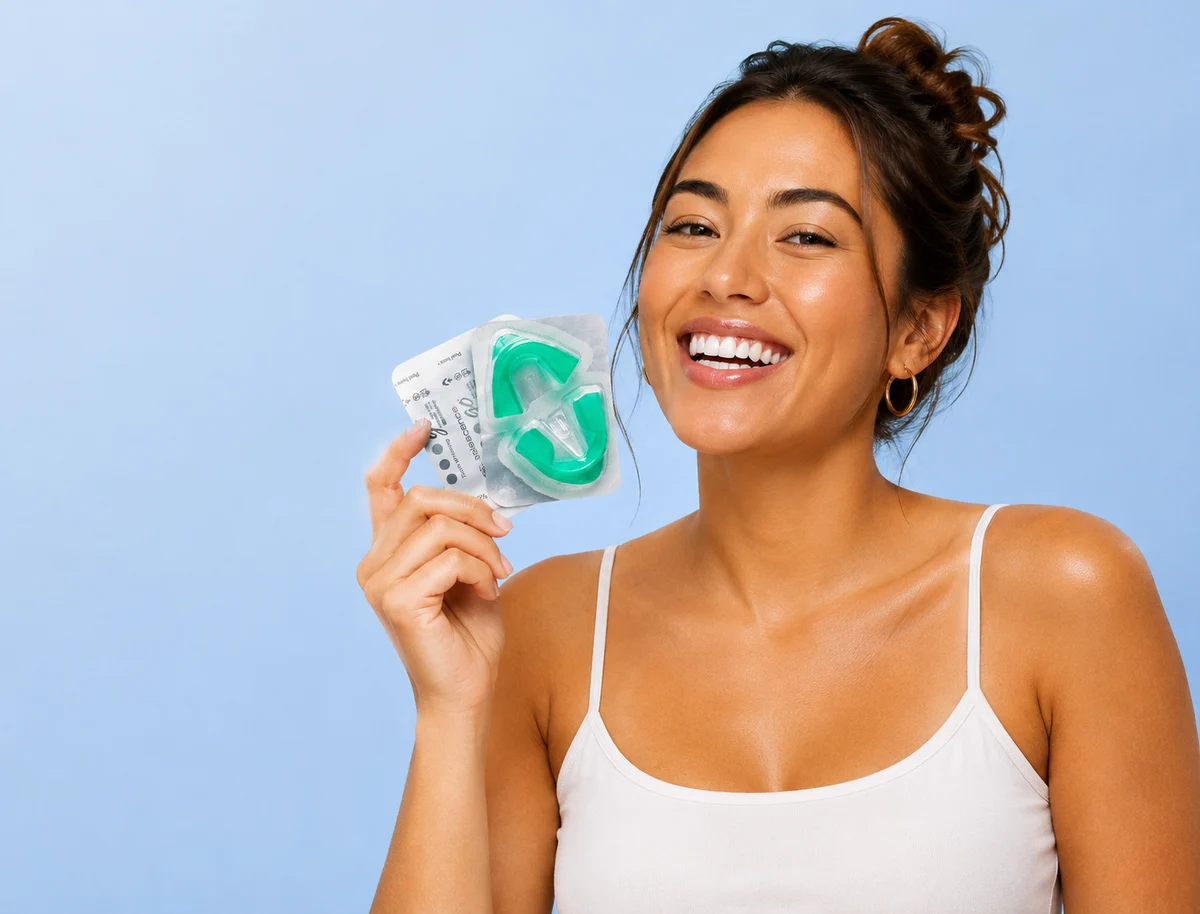
The group chat has decided on a rooftop dinner in two weeks, which means a group photo, which means you have spent the last twenty minutes scrolling whitening kits with blue lights, purple serums and a lot of before-and-after pictures that look a little too good. Every one of them claims to be the best.
Here is the useful version. The best at-home teeth whitening kit for most people is one that uses a real peroxide gel, holds that gel evenly against the teeth without soaking the gums, and comes with clear wear times and a plan for sensitivity. The light, the packaging and the price tag matter far less than those three things. Below is how the main types compare, what to check on a label, and which home remedies are worth skipping.
What makes an at-home whitening kit actually work?
Nearly every product that genuinely changes tooth color relies on the same chemistry. Hydrogen peroxide, or carbamide peroxide, which breaks down into hydrogen peroxide in the mouth, diffuses through the enamel and into the dentin beneath. There it oxidizes the large pigmented molecules that make teeth look yellow or gray, breaking them into smaller pieces that reflect less color. Carbamide peroxide releases its peroxide more slowly; a 10% carbamide gel delivers roughly the same active peroxide as about 3.5% hydrogen peroxide.
That gives you the three variables that separate a good kit from a disappointing one. First, the active ingredient and its concentration. Second, contact: how completely and evenly the gel covers the tooth for the full session. Third, time: how long each session lasts and how many sessions the course includes. A kit that gets all three right on a sensible schedule will usually outperform a flashier one that gets any of them wrong.
Many kits include a blue LED mouthpiece. Research on light activation has generally found it adds little whitening beyond what the peroxide does on its own at home strengths. It will not hurt most people, but it is not the reason a kit works, and it is not worth paying extra for.
Best at-home teeth whitening kits, compared by type
Rather than ranking brands, it is more useful to rank formats, because the format decides how the chemistry reaches your teeth. Within each type, look for the label details in the next section.
For most adults starting from scratch, prefilled trays or a well-reviewed strip are the practical sweet spot, and custom trays are the upgrade if you plan to keep whitening over the years. If you already know your teeth are sensitive, lean toward lower concentrations used over more sessions. There is a separate guide on whitening for sensitive teeth if that is your starting point.
How to choose a good home teeth whitening kit
- A named active ingredientLook for hydrogen peroxide or carbamide peroxide with a stated percentage. A kit that will not tell you what is in the gel is asking you to guess.
- A sensible concentrationHigher is not automatically better. Higher percentages work faster but raise the odds of sensitivity and gum irritation. Moderate strengths used consistently get most people to a similar place.
- Fit and gum protectionThe gel should stay on enamel. Trays that seal near the gumline and strips that sit below it without overlapping reduce irritation.
- Sensitivity supportPotassium nitrate or fluoride in the gel, or a recommendation to use a sensitivity toothpaste alongside, is a good sign the maker has thought about comfort.
- Clear instructionsWear time, number of sessions and what to do if sensitivity shows up. Vague directions tend to lead to overuse.
- An ADA Seal, if you want a shortcutThe American Dental Association awards its Seal of Acceptance to some whitening products after reviewing safety and effectiveness data. Plenty of good products lack it, but it is a reasonable filter.
One more check that has nothing to do with the box: your teeth. Peroxide whitens natural enamel only. Fillings, crowns, veneers and bonding keep their color, so a front tooth with a large filling can look more obvious afterward. Gray or dark teeth from an old injury, and some internal discoloration, respond slowly or not at all. And whitening over an untreated cavity or a cracked tooth can be genuinely painful. If it has been a while since anyone looked, a quick check first is worth it.
Do teeth whitening home remedies work?
Search for homemade whitening and you will find baking soda pastes, lemon juice, apple cider vinegar, strawberries, activated charcoal, oil pulling and drugstore hydrogen peroxide mixed at home. They fall into three groups: mildly helpful, not doing much, and actively harmful.
- Baking soda toothpaste: a low-abrasion way to lift new surface stain, used as a normal toothpaste
- Rinsing with water after coffee, tea or wine so pigments have less time to settle
- Regular professional cleanings, which remove stain and tartar a brush cannot
- Lemon juice, vinegar or strawberry scrubs: acid softens enamel, and scrubbing softened enamel wears it away
- Activated charcoal: abrasive, with little evidence it changes tooth color; can wear enamel and gums over time
- Homemade peroxide mixes: unpredictable strength and no way to keep it off the gums
- Oil pulling: pleasant for some people, but there is little evidence it whitens
The most damaging DIY recipes combine something acidic with something abrasive. Enamel starts to lose mineral when the mouth drops below roughly pH 5.5, and lemon juice sits far below that. Brushing right after softens and removes that weakened surface. Whitened-looking teeth from that route are often just thinner enamel.
Can you whiten teeth at home in 2 minutes?
Not in the bleaching sense. Peroxide needs time to diffuse into the tooth, which is why real whitening sessions are measured in tens of minutes and courses in days or weeks. What can change in two minutes is how the surface looks. Whitening toothpastes remove fresh surface stain, and some contain a blue pigment that sits on the enamel and makes yellow read as whiter under most light. Purple color-correcting serums work on the same optical idea. The effect is real but short-lived, usually gone after a meal or a few hours.
That can be perfectly fine for a photo tonight. It is just a different job from whitening. If you want color that holds, plan for a course of peroxide, then a maintenance habit: rinse after dark drinks, keep up professional cleanings, and do occasional touch-up sessions rather than a full course every time.
If you want a kit with a dentist behind it, OneOral members can add prefilled whitening trays made with a 15% hydrogen peroxide gel that also carries potassium nitrate and fluoride for comfort, and message a licensed dentist before or during the course. Whatever you choose, the principles above are the same.
What is the best at-home teeth whitening kit for beginners?
Are LED whitening kits better?
How long do at-home whitening results last?
Is it safe to whiten at home without seeing a dentist?
Ready to Transform Your Oral Health?
Join thousands of members who are preventing cavities with OneOral.