The braces came off a few weeks ago, the photos have been taken, and now there is a clear plastic retainer sitting in a case on the bathroom counter. You open the case one morning and notice it looks a little cloudy, and it smells faintly like something you would rather not name.
Almost every family with a teen in retainers hits this moment. A retainer is a small piece of plastic or wire that spends eight or more hours a day pressed against teeth, bathed in saliva, and then sealed in a dark case. Of course it collects film. The good news is that cleaning one properly takes about two minutes a day, and the same post-braces window is when most people start asking the other question: can we whiten now?
How do you clean a retainer every day?
The short answer: rinse it as soon as it comes out, brush it gently with cool water and a mild, unscented soap, and let it dry before it goes back in the case. Skip the toothpaste. That one habit change fixes most cloudy retainers.
Plaque forms on a retainer the same way it forms on teeth. Bacteria in saliva settle into a sticky biofilm, and minerals from saliva slowly harden parts of that film into a chalky white scale. On a clear retainer that scale is what makes it look frosted. On a metal-and-acrylic retainer it shows up as a crust along the wire and the palate plate. Daily cleaning keeps the film soft enough to brush off before it turns into scale.
Rinse right away
When the retainer comes out, rinse it under cool or lukewarm water before saliva dries on it. Dried saliva is where the film starts to set.
Brush with soap, not toothpaste
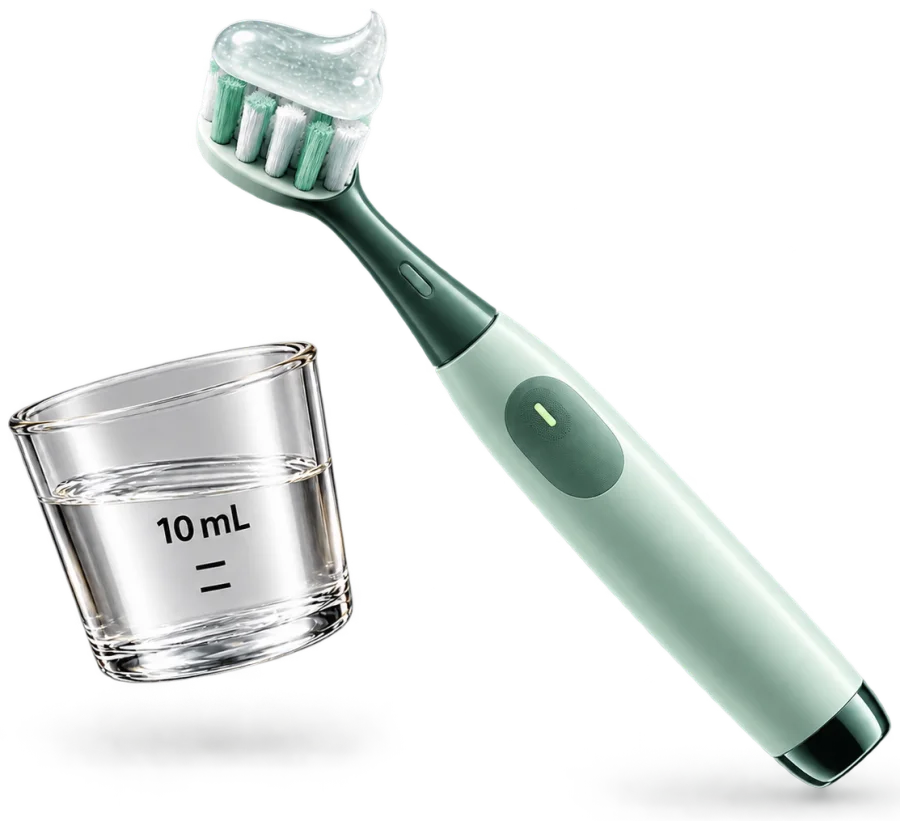
Use a separate soft toothbrush and a drop of clear, unscented dish soap or castile soap. Most toothpastes contain mild abrasives that leave fine scratches in clear plastic, and scratches trap bacteria and scatter light, which reads as cloudiness.
Get into the grooves
Brush the inside surfaces where the teeth sit, since that is where plaque collects most. On a wire retainer, brush along the wire and the acrylic plate that rests on the palate.
Rinse and air-dry
Rinse off every trace of soap, shake it dry, and let it air-dry for a few minutes if you can. A wet retainer in a closed case is a small incubator.
Clean the case too
Wash the case with soap and warm water a few times a week and let it dry open. A clean retainer in a dirty case picks the film right back up.
Hot water, boiling, the dishwasher, a sunny car dashboard and a hair dryer can all warp thermoplastic retainers. A warped retainer usually stops fitting properly, and a retainer that does not fit is not holding teeth where they belong. Cool or lukewarm water only.
What is the best way to deep clean a retainer?
Daily brushing handles the soft film. A soak once or twice a week helps with the hard white scale that brushing misses. There are a few reasonable options, and which one fits depends on the type of retainer.
After any soak, brush the retainer again and rinse thoroughly. Tablets and vinegar loosen the scale, but the brush is what actually lifts it off. If a clear retainer stays cloudy even after soaking, the plastic itself may be scratched, and no amount of cleaning restores a scratched surface.
Permanent (bonded) retainers
Many teens get a thin wire bonded behind the lower or upper front teeth. It cannot come out, so the cleaning happens in the mouth. The spot right behind the lower front teeth sits next to the openings of large salivary glands, so it tends to build tartar faster than almost anywhere else. A floss threader or floss with a stiffened end lets you pass floss under the wire between each pair of teeth. A water flosser is a useful extra for flushing debris, and a small interdental brush can reach the gaps. A professional cleaning handles the tartar that home care cannot.
How do you whiten teeth after braces?
After braces is usually the right time to think about whitening, because the brackets are gone and nothing is blocking parts of the tooth surface. Many orthodontists and dentists suggest waiting a few weeks after the brackets come off before starting. The reasons are practical. Leftover bonding adhesive is sometimes still on the enamel, gums that were puffy around brackets need time to settle, and the enamel that was under the brackets may look slightly different in color from the enamel around it at first.
Once that settling period passes and a dentist or orthodontist has checked the teeth, the usual whitening options are the same as for anyone else: whitening toothpaste for surface stain, over-the-counter strips, custom trays with a peroxide gel, or in-office whitening. Peroxide works by oxidizing the colored molecules inside enamel and dentin, which is why it can change shade in a way a toothpaste cannot.
- Any white marks near where the brackets wereWhite spots are areas where enamel lost mineral while plaque sat around the brackets. Whitening can make them stand out more in the short term. Ask the dentist to look at them first and suggest an order of operations.
- Any bonded retainerThe wire and the composite that holds it do not whiten. That is rarely visible from the front, but it is worth knowing.
- Tooth-colored fillings or bonding on front teethComposite does not respond to peroxide. After whitening, older fillings can look darker than the teeth around them.
- SensitivityTeeth that just finished moving can feel more sensitive. Starting with shorter sessions and a fluoride toothpaste tends to make whitening easier to tolerate.
Can you use your retainer as a whitening tray?
This is one of the most common questions after braces, and the honest answer is: sometimes, but only with a dentist or orthodontist saying yes. Clear retainers and whitening trays look similar, but whitening trays are often made with small reservoirs so the gel sits against the teeth instead of squeezing out onto the gums. A retainer is built to hold teeth snugly, not to hold gel. Peroxide squeezed onto gum tissue can cause irritation, and overfilling a snug retainer makes that more likely.
If a clinician approves using a clear retainer for whitening, use only a thin line of gel, wipe away anything that reaches the gums, and clean the retainer carefully afterward. Wire-and-acrylic retainers cannot be used this way.
The other part of whitening after braces is keeping the result. Teens who drink coffee, tea, cola or sports drinks through the day tend to see stain return faster. Rinsing with water after dark drinks, brushing twice a day with a fluoride toothpaste, and keeping the retainer clean so it is not pressing a film of stained plaque against the teeth all help the shade hold longer.
When should a retainer problem go to the orthodontist?
Most retainer issues are about cleaning. A few are about fit, and those are worth a call rather than a workaround. If a retainer suddenly feels tight, loose, or will not seat fully, it may be warped or the teeth may have shifted; forcing it can crack it. Cracks, sharp edges, and a bonded wire that feels loose or has popped off one tooth all belong with the orthodontist, usually sooner rather than later, since teeth can move while a retainer is out of action.
For the mouth itself: a sore spot from a new retainer usually settles within a week or two. A mouth ulcer that has not healed in about two weeks, gums that bleed persistently, or a tooth that hurts on biting deserves a dental visit. Swelling that spreads into the face or neck, fever, or trouble swallowing or breathing needs urgent in-person care the same day.
Between adjustments, a lot of parents simply want someone to ask. A OneOral membership includes messaging with licensed dentists, which works well alongside your orthodontist for the small questions, like whether that cloudy film is normal or whether it is time to start whitening.
Can I clean my retainer with toothpaste?
How often should I deep clean a retainer?
How long after braces can I whiten my teeth?
Why does my retainer smell?
When should a retainer be replaced?
Ready to Transform Your Oral Health?
Join thousands of members who are preventing cavities with OneOral.