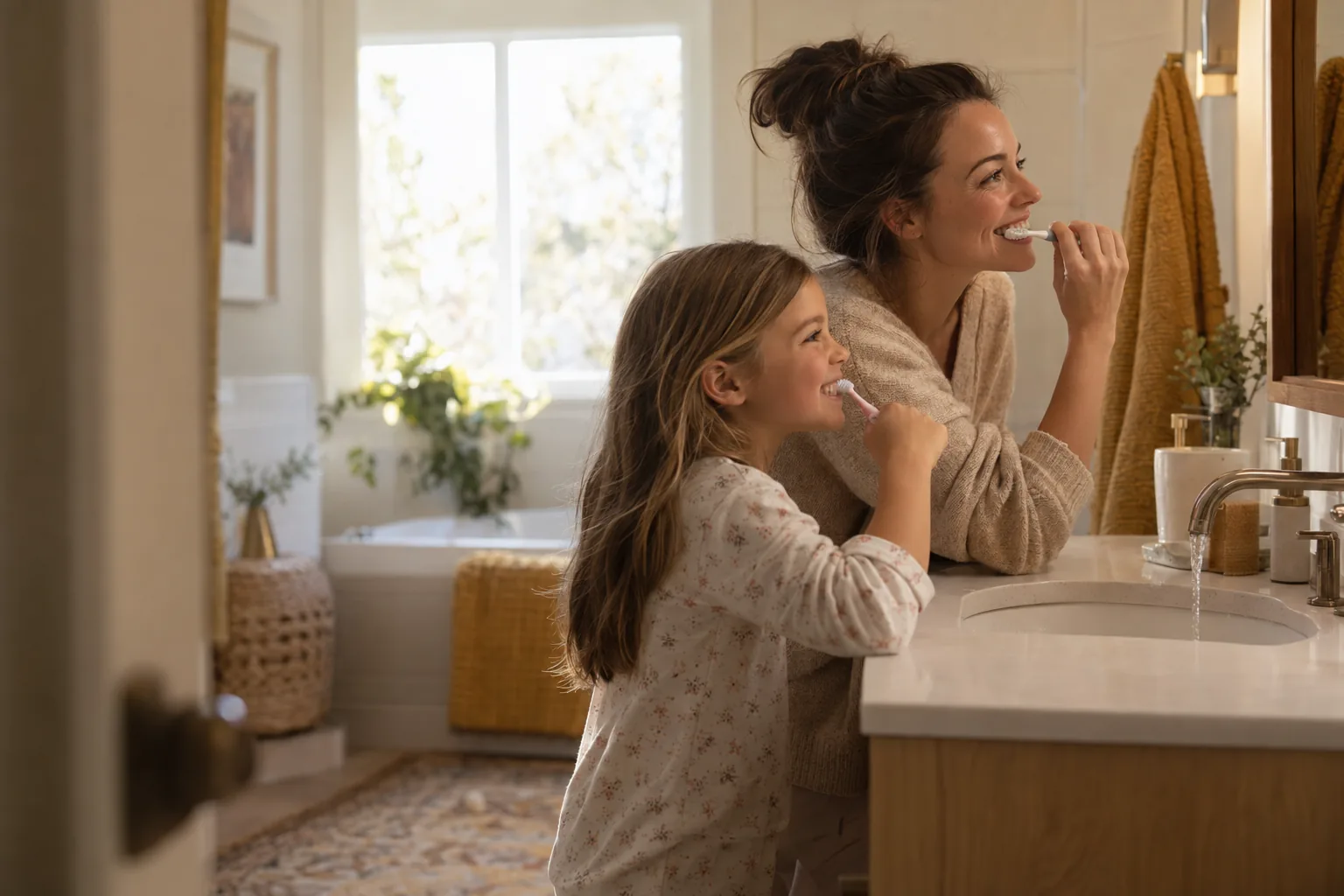
You watched them brush. You even did the back teeth yourself. Ten minutes later, they lean in for a goodnight hug and there it is again: that stale, heavy breath that makes no sense in a mouth that was just cleaned.
If your child has bad breath even after brushing, the source is usually somewhere the toothbrush is not reaching, most often the back of the tongue, or somewhere outside the mouth altogether, like the nose, tonsils or sinuses. Mouth breathing is one of the most common culprits in children and is easy to miss. It is rarely a sign of anything serious and it is not a verdict on your parenting, but persistent bad breath is worth tracking down, because the cause is usually fixable once you find it.
Why does my child have bad breath even after brushing?
Breath odor mostly comes from bacteria breaking down proteins and releasing sulfur-containing gases. Brushing the teeth removes plaque from tooth surfaces, which helps, but in children the biggest bacterial reservoirs are often elsewhere. The back of the tongue is rough and full of tiny grooves where bacteria, mucus and food particles collect. Very few kids brush their tongue unless someone shows them, and even then they tend to stop well short of the back.
The other big factor is saliva. Saliva constantly rinses the mouth and carries oxygen that odor-producing bacteria dislike. Anything that dries the mouth, such as sleeping with the mouth open, a stuffy nose, not drinking much water or a fever, lets those bacteria multiply. That is why a child's breath can smell fine at lunch and noticeably worse by bedtime or first thing in the morning, even with good brushing.
- Tongue coatingA white or yellowish film on the back of the tongue. The single most common source of breath odor at any age.
- Mouth breathingOften from allergies, a cold, or enlarged adenoids and tonsils. It dries the mouth for hours at a time, especially overnight.
- Tonsils and throatEnlarged or frequently infected tonsils can hold debris in their crevices. Some children, usually older ones, develop small tonsil stones.
- Sinus infection or post-nasal dripMucus running down the back of the throat feeds bacteria on the tongue. Look for a lingering cough, congestion or thick nasal discharge.
- Cavities or inflamed gumsDecay and plaque along the gum line, particularly on back molars that children miss, add to the smell.
- Braces, retainers and mouthguardsAppliances trap food and grow their own biofilm if they are not cleaned every day.
- Skipped meals or illnessWhen a child has not eaten for a while or is unwell, the body burns fat for fuel and produces ketones, which give breath a sweet or sour smell.
Is it coming from the mouth, the nose or the throat?
A little detective work narrows things down. The pattern of the smell often says as much as the smell itself.
| If you notice | It may point to | What to try |
|---|---|---|
| A coated tongue and breath that improves after tongue cleaning | The mouth, mainly the tongue | Add tongue brushing to the bedtime routine |
| Snoring, open-mouth sleeping, a blocked nose | Mouth breathing, allergies, adenoids | Raise it with your pediatrician |
| Breath that is worse during or after a cold | Sinuses or post-nasal drip | Usually improves as the illness clears; see a doctor if it lingers |
| Red, swollen tonsils or white spots on them | Tonsillitis or tonsil stones | Doctor visit, particularly with sore throat or fever |
| Foul smell with thick discharge from one nostril only | Something stuck in the nose, more common in younger children | See a doctor; do not try to remove it yourself |
| Bleeding gums or a sore tooth | Gingivitis or a cavity | Book a dental visit |
Could mouth breathing or snoring be the cause?
This one deserves its own section because it is so common and so often overlooked. Children who breathe through their mouths, especially at night, tend to wake up with dry mouths and strong morning breath that brushing only partly fixes. Frequent colds, seasonal allergies and enlarged adenoids, the tissue at the back of the nose, are the usual reasons. Adenoids and tonsils are naturally at their largest in early childhood, which is part of why this peaks in younger school-age kids.
Occasional snoring during a cold is normal. Snoring most nights is worth mentioning to your pediatrician, particularly if it comes with any of the signs below, since it can be a sign of sleep-disordered breathing. Sorting out the breathing often improves the breath, the sleep and sometimes daytime energy and focus as well.
What you can do at home
Most of the useful changes are small additions to the routine you already have, not a new set of products.
Brush the tongue
After brushing teeth, gently brush from the back of the tongue forward a few times. For older kids, a child-sized tongue scraper works well. Make it a game rather than a chore if gagging is an issue.
Help with the back molars and gum line
Most children do not have the dexterity to brush well on their own until around age seven or eight. Angling the bristles toward the gum line on the back teeth is where supervision makes the most difference.
Floss where teeth touch
Once neighboring teeth are in contact, food gets trapped between them. Floss picks make this manageable for kids.
Nothing but water after bedtime brushing
Milk, juice or snacks after brushing leave sugars and proteins sitting in the mouth all night, when saliva flow is lowest.
Keep water handy
A water bottle at school and a glass by the bed help keep the mouth moist, especially for kids who mouth-breathe.
Clean appliances daily
Retainers and mouthguards should be brushed and rinsed every day and left to dry in a ventilated case.
For toothpaste, a smear the size of a grain of rice is recommended for children under three and a pea-sized amount from three to six, which is standard guidance from the American Dental Association. Mouthwash is generally not needed for young children and is not recommended for kids who cannot yet reliably spit rather than swallow.
Children pick up on worry quickly. Framing tongue brushing and flossing as part of getting big-kid teeth usually works better than mentioning their breath directly, which can make some children self-conscious.
When should you take your child to a dentist or doctor?
Book a dental visit if bad breath lasts more than two or three weeks despite tongue cleaning and good brushing, or if you notice bleeding gums, brown or dark spots on teeth, a tooth your child avoids chewing on, or a bad taste they complain about. A dentist can check for decay between teeth and gum inflammation that are hard to see at home. If your child's mouth looks healthy, your pediatrician is the next stop for the nose, sinuses, tonsils and breathing.
Your child has facial swelling, a swollen gum with fever, a very sore throat with difficulty swallowing, or foul-smelling discharge from one nostril. Breath that smells unusually sweet or fruity along with extreme thirst, frequent urination, weight loss or tiredness should be checked by a doctor the same day. With vomiting, fast breathing or drowsiness, go to emergency care.
If you are not sure whether what you are seeing is worth an appointment, a OneOral membership lets you message a licensed dentist with your question and get a sense of the next step. It works alongside your child's dentist and pediatrician, not in place of them.
Is bad breath in a child a sign of illness?
Should my child use mouthwash for bad breath?
Why does my child's breath smell worse in the morning?
Can kids get tonsil stones?
Ready to Transform Your Oral Health?
Join thousands of members who are preventing cavities with OneOral.