If you are shopping for a fluoride toothpaste for gum disease, the type of fluoride matters more than the amount. Most fluoride toothpastes use sodium fluoride or sodium monofluorophosphate, which are excellent at protecting teeth from cavities but do little for inflamed gums on their own. Stannous fluoride is the exception: the tin in it is antibacterial, and stannous fluoride pastes are the ones that can legitimately claim to help prevent gingivitis. So the short answer to "what is the best toothpaste for gum disease" is usually a stannous fluoride paste, used with good technique, alongside whatever cleaning your dentist recommends below the gum line.
That last clause is the part toothpaste marketing tends to skip. A paste can help with the early, surface-level stage of gum disease. It cannot reach the deep pockets of established periodontitis. Knowing which stage you are dealing with tells you how much work the tube can realistically do.
Does fluoride toothpaste help gum disease?
It depends which fluoride compound is in the tube. Fluoride's main job is chemical: it makes enamel more resistant to acid and helps it take minerals back after an acid attack. Gum disease is a different problem. It is inflammation of the gum tissue, driven by bacterial plaque sitting along and under the gum line. A compound that protects enamel does not automatically calm that inflammation.
Sodium fluoride and sodium monofluorophosphate are the anticavity workhorses found in most toothpastes. They have little direct antibacterial effect at toothpaste concentrations. Stannous fluoride delivers fluoride too, but its stannous (tin) ion interferes with how plaque bacteria stick, grow and produce toxins. That is why some stannous fluoride toothpastes list "helps prevent gingivitis" in their Drug Facts panel, and some carry the ADA Seal of Acceptance for gingivitis as well as cavities.
Older gum-care toothpastes relied on triclosan, an antibacterial with good gingivitis data. It largely disappeared from US toothpaste around 2019 amid regulatory scrutiny of the ingredient, and stannous fluoride became the main anti-gingivitis active on shelves.
What is the best toothpaste for gum disease?
There is no single best tube, but there is a clear checklist. Read the Drug Facts panel rather than the front of the box. Words like "gum care" or "gum repair" on the front are marketing; the active ingredient and the listed uses on the back are what the product is actually permitted to claim.
- Stannous fluoride as the active ingredientThis is the one fluoride compound with a real anti-gingivitis effect. Look for gingivitis or plaque in the listed uses.
- An ADA Seal for gingivitisThe ADA Seal is product-specific, and the seal statement says what was evaluated. A seal for cavities alone does not tell you anything about gums.
- Low abrasivity if your gums have recededExposed root surfaces are softer than enamel. Heavy whitening or charcoal pastes, scrubbed hard, can wear them down and increase sensitivity.
- A desensitizing ingredient if roots are exposedPotassium nitrate or stannous fluoride can take the edge off cold sensitivity, which often appears once gums pull back.
- No SLS if you get mouth ulcersSodium lauryl sulfate, the foaming agent, seems to trigger canker sores in some people. An SLS-free paste is worth trying if you get them often.
Beyond that, choose a flavor and texture you like. A toothpaste you enjoy using for the full two minutes will do more for your gums than a better formula you rush through.
Why fluoride matters more once gums recede
Here is the part people often miss. Gum disease does not only affect gums. As periodontitis progresses, or as gums recede for other reasons, the root surfaces of teeth become exposed. Roots are covered in cementum and dentin rather than enamel, and they start losing mineral at a noticeably less acidic level than enamel, which begins to demineralize below roughly pH 5.5. Root surfaces also sit right at the gum line, exactly where plaque collects.
The result is that people with gum disease or recession tend to have a higher risk of root cavities, which can progress quickly and are awkward to fill. Fluoride of any kind helps protect those surfaces. So even if a stannous paste is your choice for the gums, you are still getting the anticavity benefit that matters more with every millimeter of exposed root. Dentists sometimes add a higher-concentration fluoride product for people at high root-cavity risk; that is a prescription decision made after an exam.
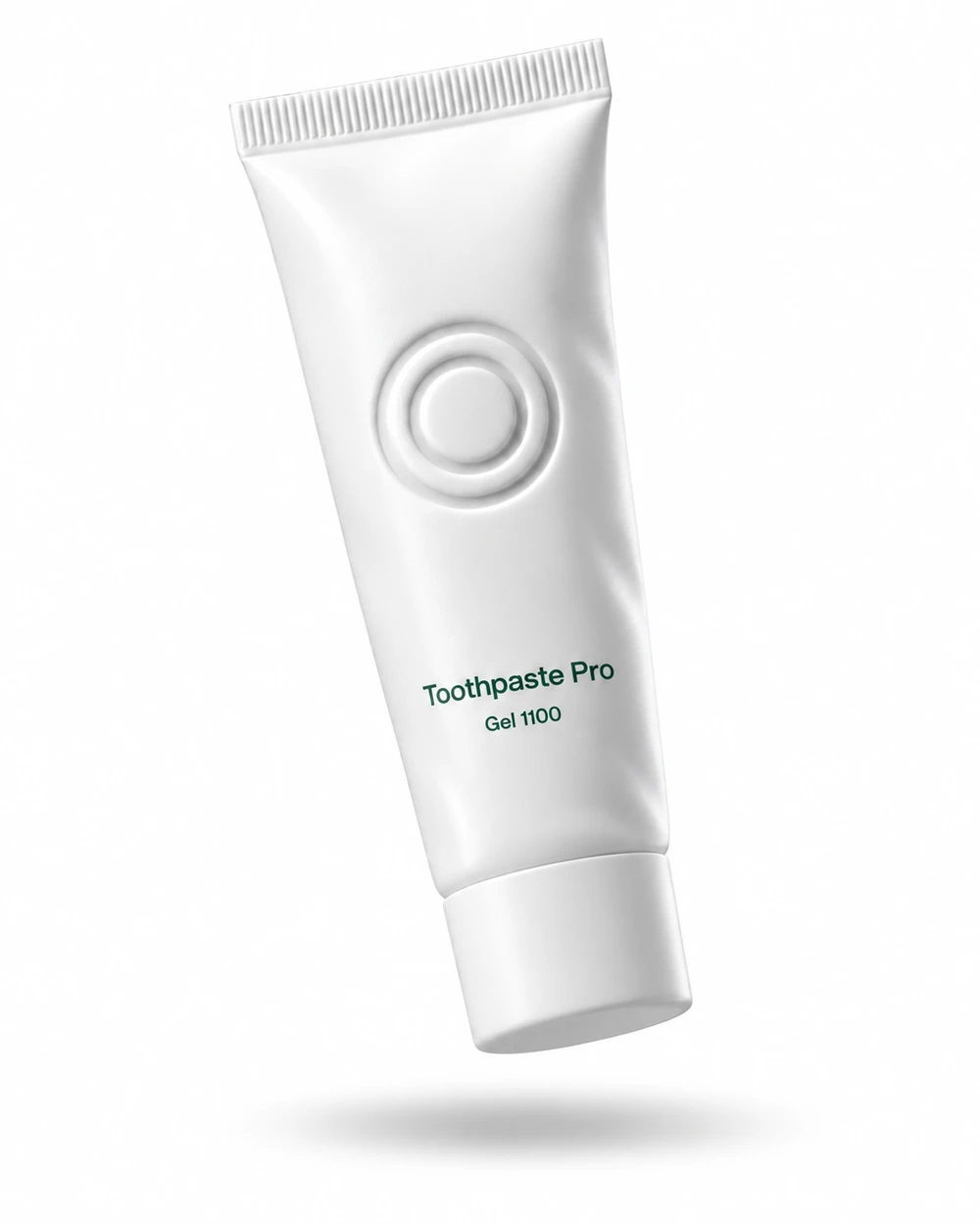
For context on OneOral's own paste: Gel 1100 contains sodium fluoride at 1,100 ppm, which is ordinary over-the-counter strength, alongside nano-hydroxyapatite and xylitol. It is designed around enamel and cavity risk rather than as a gum product, so if gingivitis is your main concern, a stannous fluoride paste is the more targeted pick. The two goals are not in competition, and your dentist can help you decide how to cover both.
What can toothpaste not do for gum disease?
Toothpaste works where the brush reaches, which is the tooth surface and about a millimeter or two under the gum edge. Gingivitis lives mostly in that zone, which is why it usually improves with better daily cleaning and why gingivitis is considered reversible with consistent care. Periodontitis is different. Once the gum has detached and formed pockets several millimeters deep, bacteria and hardened calculus sit on root surfaces no brush, paste or rinse can reach.
- Reduce plaque bacteria along the gum line (stannous fluoride)
- Support improvement of early gingivitis alongside good brushing and flossing
- Protect exposed roots from cavities
- Ease cold sensitivity on receded areas
- Remove tartar that has already hardened
- Clean deep periodontal pockets
- Regrow lost bone or gum tissue
- Replace a periodontal exam or deep cleaning
Your gums bleed most days despite a couple of weeks of careful brushing and flossing, your teeth feel loose or have shifted, gums are visibly pulling back, or you have a persistent bad taste. Swelling, pus, fever or pain spreading into the face or neck needs same-day care, and trouble swallowing or breathing is an emergency.
How to brush for your gums, not just your teeth
Technique does more for gum health than any ingredient. Plaque that sits undisturbed at the gum line for a day or two is what drives the inflammation, so the goal is to disturb it thoroughly and gently, twice a day.
Angle the bristles into the gum line
Tilt a soft-bristled brush about 45 degrees so the bristle tips reach slightly under the gum edge. Small, gentle strokes or circles. Pressure is not the goal; hard scrubbing can push gums back.
Take the full two minutes
Stannous fluoride needs contact time, and so does the mechanical cleaning. Many people brush for well under a minute without realizing it. A timer or an electric brush with one helps.
Spit, do not rinse
Rinsing with water straight after brushing washes away the fluoride and stannous that would otherwise keep working on the surface.
Clean between teeth once a day
Gum disease usually starts between teeth, where the brush cannot go. Floss, interdental brushes and water flossers all work. Interdental brushes are often easiest once gaps have opened up.
Consider an electric brush
Powered brushes, particularly oscillating-rotating ones, tend to remove somewhat more plaque and reduce gingivitis a little more than manual brushing in studies. Many also have pressure sensors, which helps if you brush hard.
If you are not sure whether your bleeding gums are a toothpaste problem or a see-someone problem, a OneOral membership lets you message a licensed dentist and describe what you are seeing. They can tell you whether it sounds like something to book in for, and your routine can then be built around what your mouth actually needs.
Is stannous fluoride better than sodium fluoride?
Can toothpaste reverse gum disease?
Should I use a mouthwash as well?
How long before my gums improve with a new toothpaste?
Ready to Transform Your Oral Health?
Join thousands of members who are preventing cavities with OneOral.