

If your gums have ever bled during a stretch when nothing about your routine changed, you were not imagining it and you were not slacking. Gum tissue responds to hormones, which means the same amount of plaque can produce noticeably different inflammation at different points in life.
Why gums are involved at all
Gingival tissue carries receptors for oestrogen and progesterone. When those levels rise, blood flow to the gums increases and the inflammatory response to bacteria is amplified. The bacteria did not change. The reaction to them did.
The points where it shows up
Puberty
Rising hormone levels can make gums swell and bleed more readily, sometimes disproportionately to how much plaque is present.
The monthly cycle
Some people notice gums that are more tender or bleed more easily in the days before a period, settling afterwards.
Pregnancy
Pregnancy gingivitis is common and usually appears from the second month. It is worth taking seriously — gum disease during pregnancy has been associated with adverse birth outcomes, and this is a topic to raise directly with both your dentist and your obstetric team.
Menopause
Falling oestrogen is associated with dryness, altered taste and sometimes burning sensations. Less saliva also means less of your natural buffering.
Routine dental care is generally considered safe during pregnancy, and postponing treatment is not automatically the cautious choice. Tell your dental team you are pregnant and how far along, and let them make the call with your obstetric team.
The dry-mouth thread running through it
Several of these stages reduce saliva, and a number of commonly prescribed medications do the same. Less saliva means less buffering, less mineral supply and less mechanical clearing — so a dry mouth quietly makes every other risk factor worse.
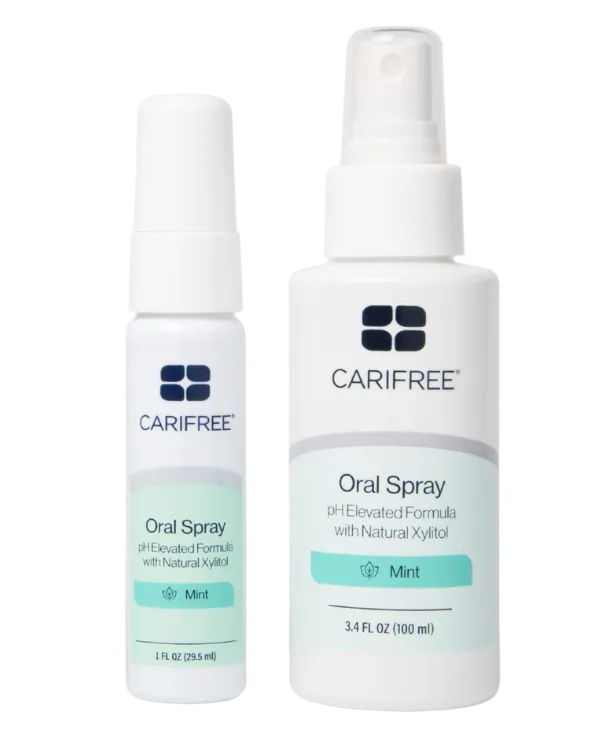
A xylitol moisturizing spray is for comfort and moisture through the day. Persistent dryness is worth investigating properly with a clinician rather than working around indefinitely, particularly if it started with a new medication.
What to do with all this
The routine does not need to be different. The expectations do. Knowing that gums are hormone-responsive tissue turns a confusing symptom into a predictable one you can plan around.
Ready to Transform Your Oral Health?
Join thousands of members who are preventing cavities with OneOral.