
Here is a fact that reframes a lot of family dental advice: babies are not born with the bacteria most associated with tooth decay. They acquire them, and the most common source is a caregiver.
Read that the wrong way and it sounds like an accusation. It is not one. Transmission happens through completely ordinary affection — a shared spoon, tasting the food to check the temperature, cleaning a dropped pacifier in your own mouth. Nobody should feel bad about any of that.
Why it is useful rather than alarming
It is useful because it gives you a lever nobody mentions. If your own bacterial load is high, you are the environment your child's mouth is colonised from. Treating your own mouth is, in a real sense, part of your child's prevention — and it is the part entirely within your control.
A cavity in a child is not evidence of bad parenting. Decay is driven by bacterial balance, saliva, diet frequency and genetics — several of which nobody chooses.
What actually reduces risk
- Treat your own mouthIf you have had repeated cavities yourself, addressing your own bacterial load is one of the more meaningful things you can do for a young child.
- Frequency over quantityA whole biscuit at once is easier on teeth than the same biscuit in six pieces across an afternoon. Each exposure restarts the acid window.
- Nothing but water in the bedtime bottleMilk and juice pooling around teeth for eight hours with no saliva flow is the specific pattern behind early childhood decay.
- Brush their teeth for them, longer than feels necessaryMost children do not have the motor control to do it properly until around seven or eight. Supervise, then re-do the back teeth.
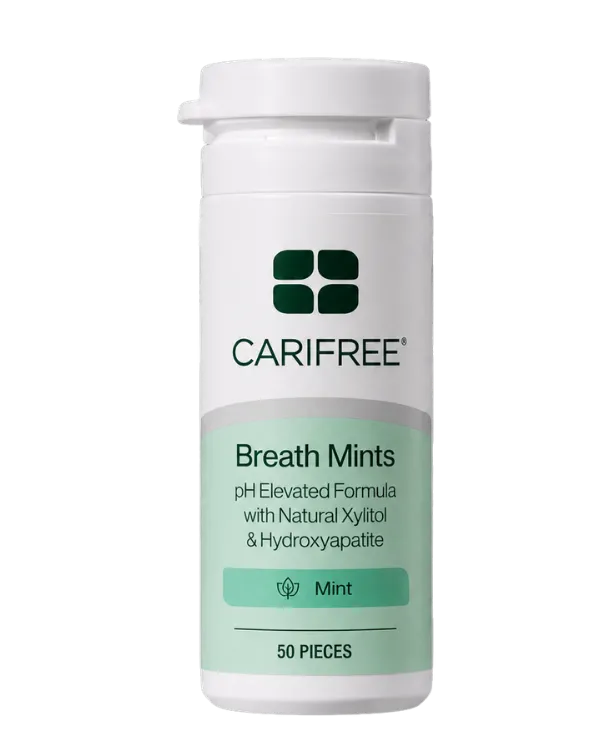
- Xylitol, where age-appropriateCavity-causing bacteria cannot ferment xylitol. For older children who can safely have mints or gum, it is a low-effort addition.
The habit that outlasts everything else
The thing most likely to still be true in twenty years is not any product. It is whether brushing is a normal part of the day or a nightly negotiation. Turning it into something with a rhythm — same time, same order, unremarkable — does more long-term good than any single intervention.
Should I stop sharing spoons entirely?
When should a child first see a dentist?
Is fluoride toothpaste safe for small children?
Ready to Transform Your Oral Health?
Join thousands of members who are preventing cavities with OneOral.